Reference · Duet beat into the solo portrait
1:1 · 0:15
Turn two authorized photos into a Somebody That I Used to Know AI video: one person as the hatted figure who laughs beside the singer and then slips out of the frame, the other as the profile singer who holds the wall to the end — both camouflaged into a flat polygonal backdrop by the same geometric body paint. The supplied references follow the viral body-paint duet format; this workflow keeps both of your subjects’ own faces and hair instead of pasting in any reference performers.
2 photos · Wan 3.0 · 5–15s · Square 1:1 · Credits shown before generation
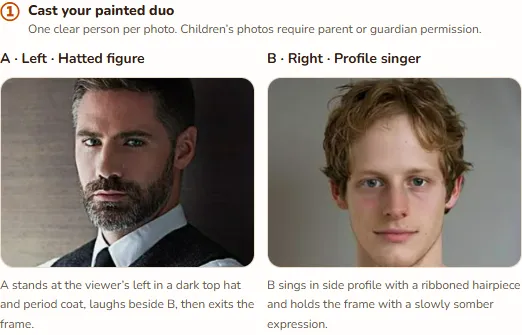
A · Left · Hatted figure
A stands at the viewer’s left in a dark top hat and period coat, laughs beside B, then exits the frame.
B · Right · Profile singer
B sings in side profile with a ribboned hairpiece and holds the frame with a slowly somber expression.
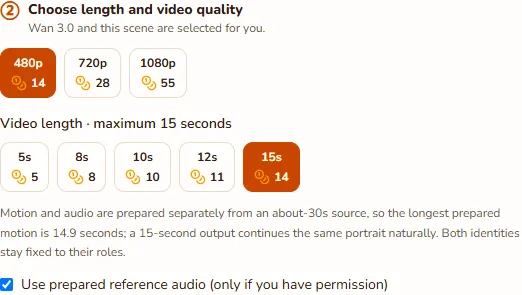
Video length · maximum 15 seconds
Motion and audio are prepared separately from an about-30s source, so the longest prepared motion is 14.9 seconds; a 15-second output continues the same portrait naturally. Both identities stay fixed to their roles.
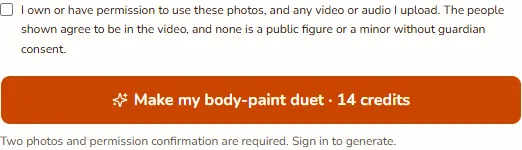
Two photos and permission confirmation are required. Sign in to generate.
Supplied body-paint duet reference · not a verified site output
The same rules apply to every scene on this page — checked against the generator itself, so you can decide before uploading anything.
| Item | What you get |
|---|---|
| Input photo | One photo of one person — JPG, PNG or WebP, up to 10 MB. A clear, front-facing face works best. |
| AI model | Wan 3.0 reference-to-video: your photo plus the supplied trend reference clip. |
| Output file | MP4 video, vertical 9:16. |
| Video length | 5, 8, 10, 12, 15 seconds — you pick before generating. |
| Resolution | 480p, 720p or 1080p (480p is the default). |
| Sign-up | Not needed to watch any example on this page; a free account is required to generate. |
| Cost | Credits, quoted before you generate — see the per-second price table below. Watching examples is free. |
| Watermark | None is added: the generation prompt explicitly excludes captions, logos and watermarks. |
| Generation time | Usually five minutes or more; longer when the queue is busy. A technical failure returns the credits automatically. |
| Face fidelity | Requested, not guaranteed — check the face, hands and body proportions in the result before sharing it. |
| Sound | Scene sound is generated; rights to the original trend track are not granted, so add a licensed sound when posting. |
Turn two authorized photos into a body-paint duet portrait: both figures camouflaged into a polygonal wall, one laughing and exiting, the other singing in profile to the end. The workflow keeps both subjects’ own faces and never reproduces any real singer or the official video.
Watch the complete result without sound first. Confirm each person still has their own face and hair, that neither identity drifts onto the other body, and that the paint blocks read as camouflage rather than costume before sharing.
The reference keeps one art direction all the way: a flat polygonal wall in dusty beige, olive and mauve, the same paint blocks wrapping both performers’ skin, a duet beat that ends with one figure gone and the singer alone. Watch how the duet hands off to the solo.
1:1 · 0:15
The supplied variant opens on both painted figures chest-up, follows the hatted figure out of frame, then tightens on the singer’s long note and the somber settle. The display copy is a 14.9-second cut from an about-28-second source.
Use our photos for the painted duetThis is a supplied trend reference trimmed to a 14.9-second display cut, not a verified output of this website and not the official music video. The prompt keeps both uploaded subjects’ identities and never reproduces any real singer. Exact paint edges and perfect facial matches are not guaranteed.
Sign in and choose a JPG, PNG or WebP up to 10 MB per person. Use two separate photos — one person each, faces unobstructed, since the art direction leans on profile and chest-up framing. Children require parent or guardian permission for each photo. Avoid group shots, heavy filters and hands hiding the face.
Try this step in the generatorCast your painted duo
 Enlarge interface screenshot
The model is already Wan and the format is square 1:1. Choose 5, 8, 10, 12 or 15 seconds and a supported resolution; the default is 15 seconds at 480p. The prepared motion reference is capped at 14.9 seconds, so a 15-second output continues the portrait naturally. Read the credit quote and enable reference audio only when you have permission.
Try this step in the generatorChoose length and video quality
 Enlarge interface screenshot
Confirm permission and start the task. Allow at least five minutes and longer during busy queues. The centered percentage is estimated; the pixel animation illustrates waiting rather than actual provider frames. When the MP4 appears, watch it from beginning to end, first muted and then with sound. Check both faces, the paint blend and the exit handoff before downloading or opening the share options. Another generation uses credits again.
Try this step in the generatorConfirm and create
 Enlarge interface screenshot
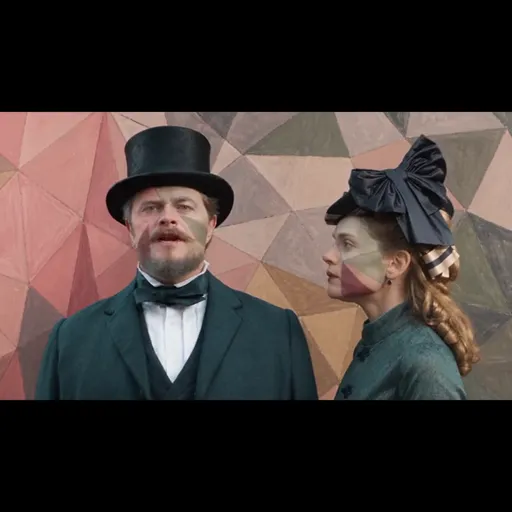
The painted-duet look is easy to recognize: a flat, low-texture polygonal backdrop in dusty beige, olive and muted mauve, with the same geometric paint blocks covering both performers’ visible skin so their edges only just separate from the wall. One wears a dark top hat and period coat and laughs beside the singer; the other sings in side profile with a ribboned hairpiece, holds a long note, and settles into a somber stare as the frame becomes a solo portrait.
This is the two-photo version of the trend in an original fan-art body-paint aesthetic. It is not a single-person scene, and it is not the official music video: the prompt never reproduces any real singer, actor or the original shot list. Both figures come entirely from your two uploaded photos. Faces, paint edges and timing can still vary.
Assign the hatted figure and the singer before uploading — each photo’s angle shapes how Wan paints that role. A clearer profile photo makes the singer’s long-note framing stronger.
Watch the complete result without sound first. Confirm each person still has their own face and hair, that neither identity drifts onto the other body, and that the paint blocks read as camouflage rather than costume. A striking wall does not replace checking these details before sharing.
The source runs about 30 seconds, and maximum prepared motion is 14.9 seconds. Selecting 15 seconds does not supply a longer original performance; it asks Wan to continue the same portrait. Choose 10 or 12 seconds for a version close to the supplied cut, and keep platform captions away from the paint edges.
The table uses the same current Wan calculation as the generator and server, including the prepared motion reference. Length and resolution affect the total. Watching the supplied example is free; making a personalized video requires sign-in and enough credits. Read the quote on the button before you start, and use 480p for a lower-cost first attempt.
| Lengths | 480p | 720p | 1080p |
|---|---|---|---|
| 5s | 5 | 10 | 19 |
| 8s | 8 | 15 | 30 |
| 10s | 10 | 19 | 37 |
| 12s | 11 | 22 | 44 |
| 15s | 14 | 28 | 55 |
Credits are deducted when a task starts. Confirmed technical failures or cancellations restore the charged credits through the task ledger. A completed clip with imperfect facial detail, hands or timing is not automatically a failed task, and another generation uses credits again. Credit-pack prices, expiry and purchase refund conditions are on the pricing page. Download results you want to keep.
See credit packs and purchase rulesIt turns two photos into a body-paint duet portrait: both figures camouflaged into a flat polygonal wall, one laughing and exiting, the other singing a long note in profile until the frame becomes a solo. Your photos guide both appearances; the reference guides the art direction and beat timing.
No. The name follows a viral body-paint duet trend, but this is an original fan-style artwork: the prompt never reproduces any real singer, actor or the original shot list, and both figures come entirely from your two photos. It is not affiliated with any artist or label.
Output duration is separate from reference duration. The supplied sources run about 28–30 seconds, and maximum prepared motion is capped at 14.9 seconds; nothing is stretched into a fake source. For a 15-second output, Wan continues the portrait naturally. Other options are 5, 8, 10 and 12 seconds.
Wan 3.0 reference-to-video is the only model. Output is square 1:1 MP4 at 480p, 720p or 1080p. The default is 15 seconds at 480p. The wall, paint and beat order are prepared; there is no custom scene, lyrics or video-upload control here.
The prompt requests each person’s identity and hair cues, but exact preservation is not guaranteed — especially under the painted-camouflage art direction. Check both faces and the paint blend. The preview is not a measured success-rate example or a verified result from your photos. Another render is a new paid attempt.
Prepared reference audio is optional when the site enables it. It guides melody timing, but generated sound may differ and no original recording is included or guaranteed. Photo permission does not grant music rights. If you plan to post publicly, use sound you are permitted to use or add an available platform-licensed track after downloading. Turning off reference audio still allows Wan to generate room tone.
Allow at least five minutes, and longer when the queue is busy. The centered percentage is an estimate, and the pixel animation illustrates waiting rather than actual provider frames. A confirmed technical failure or cancellation restores charged credits. A completed result you dislike is not automatically a technical failure. Keep the task ID if you need support to investigate an unresolved job.
Yes. Review the output first, then download it or use a supported device share sheet. The fallback helps you save the file and open TikTok or X; you may still need to attach the video yourself. You choose the caption, permitted sound and final publish action. The site does not automatically post to your social accounts, and you should disclose that the clip is AI-generated.
Use photos you own or have permission to animate, and disclose that shared results are AI-generated. The supplied videos are trend references, not verified outputs of this website, the official music video, or an endorsement by any artist, label or platform. Photo permission does not grant music rights. Personal uploads and results follow existing private storage and owner-access rules. Current privacy, terms and support are available through the footer.
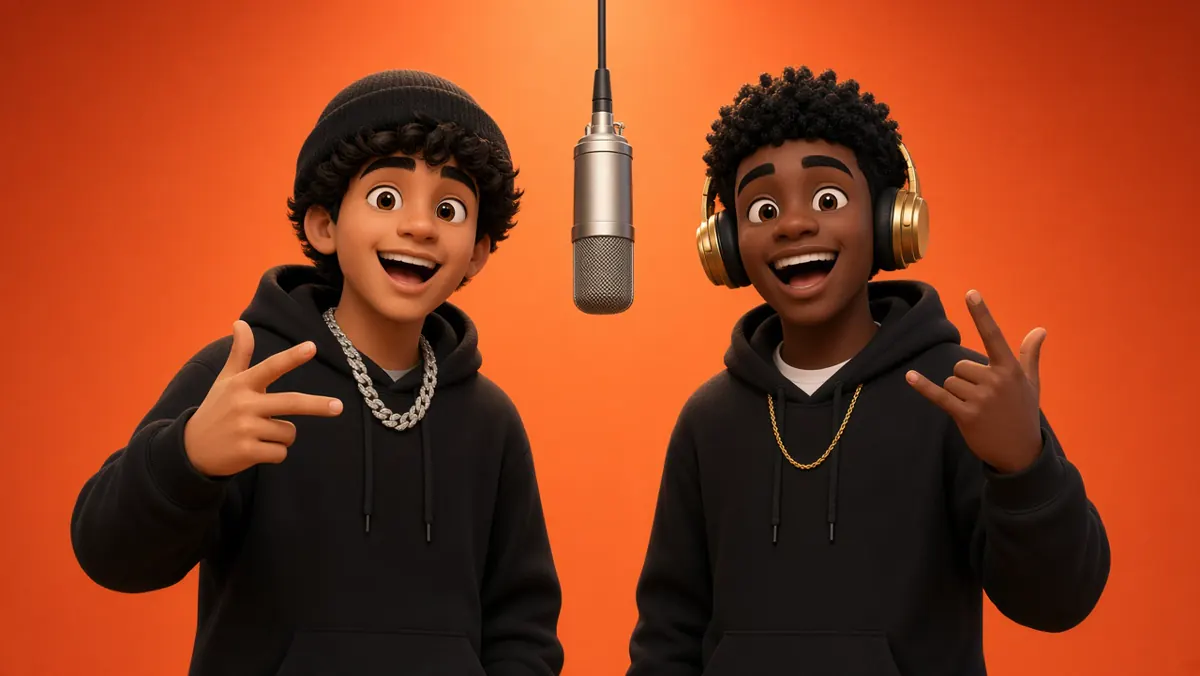
Start from the main studio: bring two portraits together, explore three stages, and choose a reference track or an original rap.
Explore this video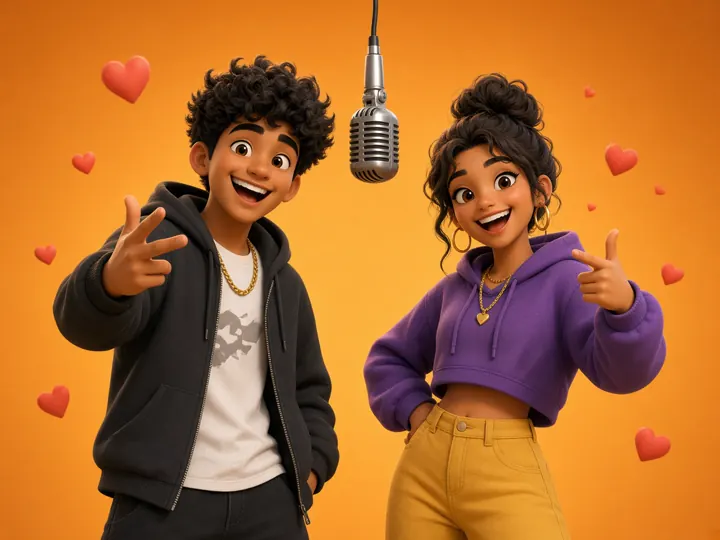
Make a performance for two friends or a couple. Choose who leads, or switch to an original rap and trade lines.
Explore this video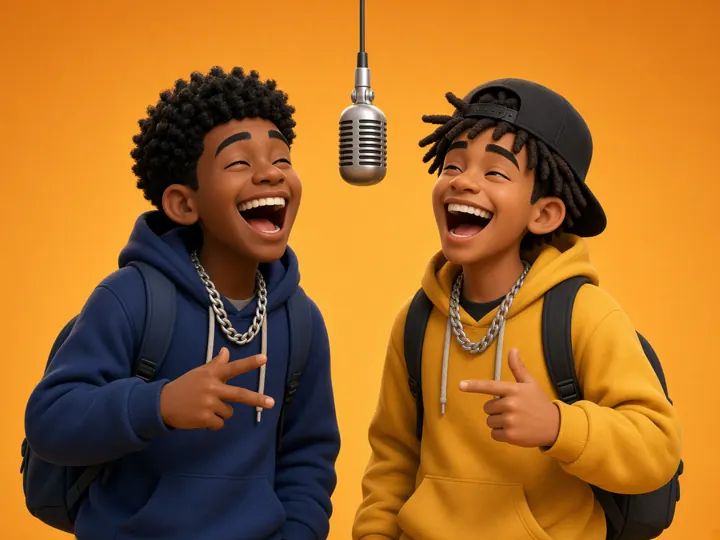
Recreate the orange-booth routine with two portraits, one hanging microphone, and a lead-and-hype performance.
Explore this video