What Is the Grandpa Dance Party AI Trend? (2026 Guide)
The grandpa dance party AI trend explained: where it came from, how the videos are made, why grandpas, and how to make yours from one photo.
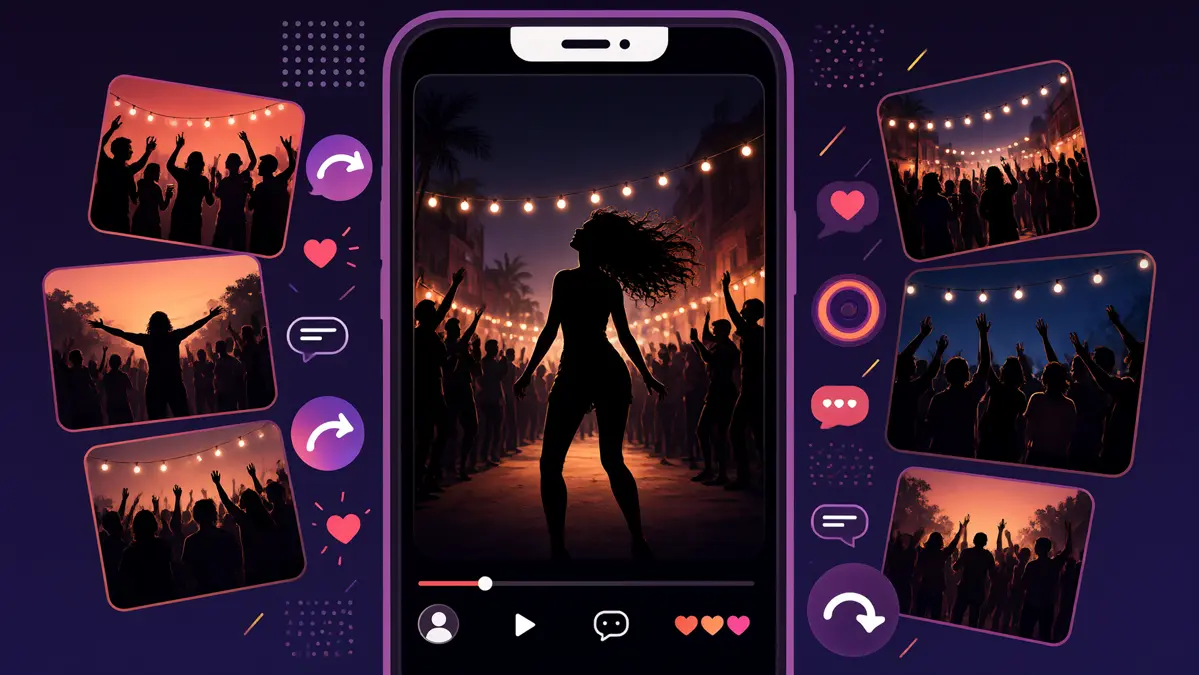
The grandpa dance party AI trend is a viral video format where an unlikely dancer — usually a grandpa — becomes the surprise star of a packed night street party, grooving in the center while an anonymous crowd claps, cheers and films. The clips are made with AI: one still photo of the person is animated into the party scene by a reference-to-video model or a pre-built template. No one at the party is real; the joke is that your own grandpa now looks like he owns the dance floor.
This guide explains where the trend came from, how the videos are actually made, why the format works so well, and how to make your own version from a single photo. If you already know what it is and just want the steps, jump to How to Do the Grandpa Dance Party AI Trend From One Photo.
Where did the trend come from?
The format spread on TikTok through 2025–2026 under tags like "grandpa at the dance party" and "AI guys dancing". Two currents fed into it:
- Full-body AI animation matured. Older face-animation apps only moved the head and shoulders — search Reddit for "how do I make my picture dance" and you'll find people complaining that no tool animates the whole body. Reference-to-video models changed that: choreography from a professionally captured reference clip can now be transferred to any person in a photo, arms, legs and hips included.
- CapCut template culture made it remixable. CapCut hosts template pages for the trend with millions of uses — one popular "grandpa dancing" template shows 4.7 million uses at the time of writing. Templates let anyone join in seconds, which is exactly how a format reaches critical mass.
The trade-off of template culture is sameness: millions of people applying the same pre-made clip with the same crowd, lighting and moves. That's also why generator-style tools gained ground — they build a new video around your photo, keeping your subject's own face, age and outfit instead of pasting in a reference dancer.
How are these videos actually made?
There are two production paths, and they differ more than most people realize:
| | CapCut template | One-photo AI generator | | --- | --- | --- | | Your input | A photo, slotted into a fixed template | One photo, interpreted by a video model | | Who appears | Your subject's face in a pre-made scene | Your subject's own face, outfit and approximate age | | The crowd/moves | Identical for everyone | Recreated per generation | | Output control | Fixed length and format | Choose length (5–15s) and resolution | | Typical cost | Free with the app; pro assets may cost | Credits per video, quoted before generating | | Best for | Speed | A clip that reads as "your grandpa", not "the meme grandpa" |
The Charme Dance AI page on this site is an example of the second path: you upload one photo (JPG, PNG or WebP, up to 10 MB), pick 5–15 seconds and a resolution, and the generator animates your subject into the street-party scene — complete with a cheering anonymous crowd that never inherits your subject's face.
Why grandpas? The psychology of the format
The trend's engine is contrast. A grandpa is the last person you expect to see commanding a street party, and the gap between expectation and image is what makes people stop scrolling. Three specific mechanics make it work:
- Wholesome surprise. Unlike most viral formats, nobody is mocked — the grandpa is the hero, not the punchline. That makes the clip safe to share in family group chats, which extends its reach well beyond the usual TikTok audience.
- Recognition humor. Everyone knows a grandpa like this. Captions like "my dad discovering TikTok parties at 71" turn a generic clip into a personal one.
- Believable-unbelievable motion. Modern models dance the subject with genuine commitment — stiff-hipped but enthusiastic reads as more real than a polished dancer would. Comment sections regularly argue about whether the clips are really AI (r/isthisAI threads about similar dance videos show exactly this debate).
Is the grandpa in these videos real?
No — and this is worth stating plainly. The person looks like your grandpa because the model reads identity cues from the photo you supply, but the dancing itself is generated, guided by a prepared reference clip. Nobody filmed your grandfather dancing, and the crowd doesn't exist. That also means the usual AI-video caveats apply: face fidelity is requested but not guaranteed, hands can look odd, and you should only use photos you have permission to use. Platforms increasingly expect AI-generated content to be disclosed when posted.
How do you join the trend from one photo?
The short version (the full walkthrough has every detail):
- Pick a clear, front-facing photo of your star — one person, everyday clothes, sharp face.
- Open the Charme Dance AI generator, watch the free examples to see the exact scene, then upload the photo.
- Choose 5–15 seconds and 480p/720p/1080p, check the credit quote shown before generating, and let it render (five minutes or more).
- Review the face and hands, download the vertical 9:16 MP4 — no watermark is added — and post with your own caption and a licensed sound.
New to AI dance videos generally? The general photo-to-dance guide covers tools, costs and limits across the whole category.
FAQ
Is the grandpa dance party trend the same as the "AI guys dancing" trend?
Close cousins. "AI guys dancing" is the broader family of AI full-body dance clips; the grandpa-at-the-party format is the most popular single scene in that family, defined by the street-party setting and the surprise-star structure.
Do I need an app or video editing skills?
No editing skills. You either use a template app or a web generator — both need just a photo. A web generator like the Charme scene page works in a browser with no app install.
Is it free to make one?
Watching examples is free on this site; generating costs credits quoted before you commit (one-time packs, no subscription — see pricing). Free template apps exist, but many stamp their exports with a watermark or lock the best assets behind a subscription.
How long does the trend clip take to generate?
Around five minutes or more per video, longer when the queue is busy. Template apps can be instant because they reuse a fixed pre-made clip.
Where do I start?
Open the Charme Dance AI page, watch the free examples, then upload your photo — or start from the main studio to compare every scene.